
Algorithmic Alignment: How to Force Google to Recognize Your Business as the Local Authority
Becoming a recognized local authority on Google requires targeted algorithmic alignment: consistent business data, an optimized Google Business Profile, schema markup, and automation to keep everything current.
Key Takeaways
- Algorithmic alignment positions businesses as local authorities on Google.
- Core ranking factors: local citations, Google Business Profile, and reviews.
- Optimize your Google Business Profile for better local visibility.
- Schema markup helps search engines interpret your offerings and increases rich-result potential.
- Automation tools streamline citation management and review monitoring.
- Consistent data across platforms improves credibility and search performance.
- Schema and automation often correlate with measurable local improvements.
- Regular maintenance of listings and reviews sustains long-term visibility.
What Are the Key Google Local Ranking Factors for Algorithmic Alignment?
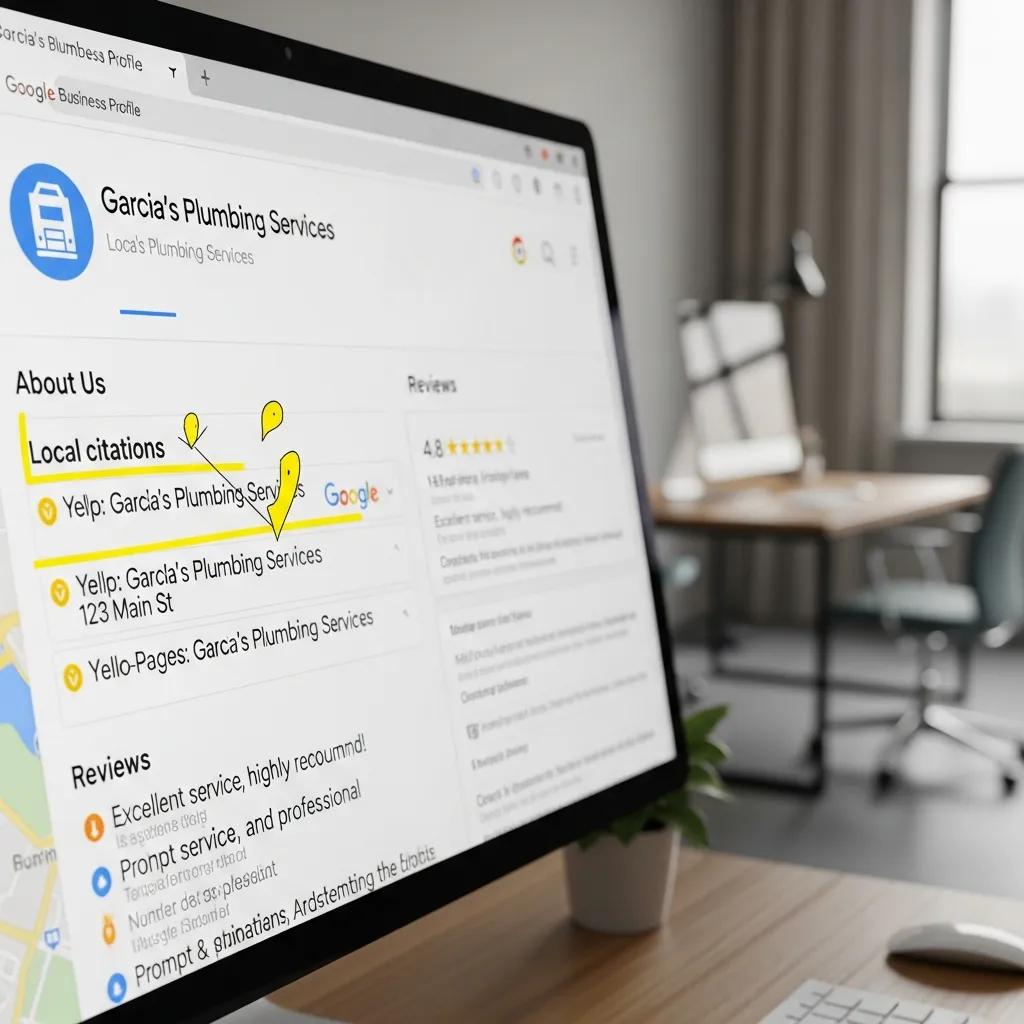
Google’s local algorithm evaluates consistency, relevance, and user signals. Primary elements are local citations, a complete Google Business Profile, and review quality.
How Does Google Determine Local Business Authority?
Authority is inferred from consistent NAP data across sites, the volume and quality of reviews, and relevance to local queries. A well-maintained GBP and positive feedback improve trust and visibility.
Academic research also highlights how a well-maintained Google Business Profile connects local businesses with potential clients and boosts search visibility.
Google Business Profile for Local Search Visibility
This study examines how businesses can grow and appear in local search results by using Google Business Profiles (GBPs). Many people search online before visiting a store or using a service, and GBPs help local businesses connect with customers. The research looks at how details location, contact information, hours of operation, website link, reviews, and images affect consumer choices. It also analyses how an active, updated profile improves visibility on Google Maps and in local searches.
A STUDY ON THE IMPACT OF GOOGLE BUSINESS PROFILE ON BUSINESS SUCCESS, B Sharma, 2025
Which Business Authority Signals Impact Local Search Rankings?
Several signals drive local rankings, notably:
- Local Citations: Accurate NAP mentions across directories build verification and trust.
- Google Business Profile Optimization: Complete profiles (hours, photos, services) improve local visibility.
- Customer Reviews: Quantity, quality, and recency of reviews influence rankings and conversions.
Prioritize these signals in your local SEO plan to improve discoverability.
How to Implement Schema Markup for Enhanced Local SEO Recognition?

Schema (structured data) tells search engines what your business does and where. Implementing a valid schema increases the chance of rich results and clearer search listings.
What Is Schema Markup and How Does It Improve Local SEO?
Schema markup supplies details, location, services, and reviews in a machine-readable format. JSON-LD is the recommended format; properly applied schema helps search engines match queries to your business and can improve click-through rates.
Additional research highlights the wide adoption and effectiveness of certain schema formats in e-commerce and their role in improving online visibility.
Effective Schema.org Micro-Markup for E-commerce
The purpose of the article is to identify the most effective schema.org micro-markup schemes used in e-commerce projects. Methodology. The research included competitive intelligence among the leading online platforms operating in Europe in general and in Ukraine in particular. The study involved TOP-8 e-commerce projects in Ukraine and TOP-9 global cross-border marketplaces operating in Europe. The service validator.schema.org was chosen as the research tool. Results. The study showed that the most popular schema.org micro-markup format is JSON-LD. In general, 82.4% of the surveyed sites use JSON-LD microdata format.
Use of Schema. org micro-markup in e-commerce projects, O Belz, 2022
What Are Best Practices for Schema Markup Implementation?
Follow concise best practices to get reliable results:
- Use Valid Schema Types: Choose the right type (LocalBusiness, Organization) and complete key properties.
- Keep Data Consistent: Match schema values to your website, GBP, and directory listings.
- Test Your Markup: Validate with Google’s Rich Results Test before publishing.
Correct, consistent schema reduces ambiguity and supports local search visibility.
Which Automated Local SEO Tools Help Force Algorithmic Alignment?
Automation tools reduce manual maintenance and help keep NAP, citations, and reviews synchronized across services. Choose tools that integrate with major directories and Google.
How Do Local SEO Automation Tools Reduce Manual Workload?
Automation handles repetitive tasks-citation distribution, review alerts, and basic reporting-so teams can focus on strategy and local engagement.
What Features Should You Look for in Local SEO Tools?
Look for citation management, review monitoring, and performance analytics as core features.
- Citation Management: Centralized control and bulk updates for listings.
- Review Monitoring: Alerts, sentiment summaries, and response tools.
- Performance Analytics: Local ranking and traffic insights to guide optimizations.
These features help maintain consistency and measure local impact efficiently.
What Market Dominance Strategies Leverage Algorithmic Alignment?
Market dominance comes from systematic local SEO: consistent listings, strong reviews, tactical schema, and automation that enforces accuracy at scale.
How Can Algorithmic Alignment Drive Local Business Authority?
By aligning site content, GBP, citations, and schema with search intent, businesses improve relevance and visibility, which typically leads to more local engagement.
What Case Studies Demonstrate Success Using Schema and Automation?
Case studies frequently show improved discovery and increased local engagement after applying schema and automating listings and reviews. Measuring before-and-after metrics confirms impact.
Research also supports the strategic importance of local optimization and schema markup for retailers, showing their role in securing placement in Google’s Local Pack and boosting organic traffic.
Local SEO & Schema Markup for Google Local Pack
The Purpose of the presented research is to substantiate the importance of the local optimization of the retailer’s business for search engines to increase organic traffic; to represent insights and give practical recommendations for retailers regarding local optimization of their business in Google as part of an effective marketing strategy; to create the typical valid data micromarking (by the example of the Ukrainian retailer), which will contribute to an advantageous placement in the Local Pack in comparison with competitors, and increase organic traffic and conversion.
Business optimization in the digital age: Insights and recommendations, A Natorina, 2020
Frequently Asked Questions
What is the importance of local citations in SEO?
Local citations confirm your business details to search engines and users. Accurate, consistent citations make verification easier and support better local rankings.
How can customer reviews influence local search rankings?
Reviews are trust signals: more positive and recent reviews improve visibility and influence user choice. Encourage reviews and respond promptly.
What role does Google Business Profile play in local SEO?
GBP supplies key public information (hours, location, photos) and is a major signal for local visibility and the Local Pack. Keep it current and complete.
How does schema markup affect click-through rates?
Schema enables richer search results (snippets, ratings) that provide clearer context and often increase click-through rates.
What are the benefits of using automated local SEO tools?
Automation saves time, enforces consistency across listings, and provides monitoring and reporting so you can scale local SEO tasks.
How can businesses measure the success of their local SEO efforts?
Track local traffic, rankings, GBP insights (views, calls, directions), and conversion metrics to evaluate progress and adjust tactics.
Conclusion
Use algorithmic alignment, consistent citations, an optimized Google Business Profile, correct schema, and automation to strengthen local authority and improve discoverability. Start with data consistency and measure results.