Local SEO vs Traditional SEO Insights
Local SEO focuses on visibility for nearby searches and map results, while Traditional SEO targets broader national or global audiences. This article compares core tactics, practical use cases and ways AI can strengthen both approaches to improve customer acquisition and business outcomes.
Key Takeaways
- Local SEO targets nearby customers via Google My Business, consistent citations, and review management.
- Traditional SEO prioritises keyword research, content optimisation and link building for wider reach.
- AI accelerates routine tasks and surfaces data-driven insights for both local and broad SEO campaigns.
- Use Local SEO for retail, service providers and hospitality; use Traditional SEO for e-commerce and national brands.
- Track traffic sources, conversions and engagement to measure performance and optimise effort.
- Integrating AI with revenue infrastructure increases automation, efficiency and measurable ROI.
- Keep local listings and citations current and respond to reviews to maintain local relevance.
What is Local SEO and How Does It Target Local Search Optimization?
Local SEO helps businesses appear in geographically relevant searches and map packs. It connects nearby customers with clear local signals—accurate listings, location pages and review activity—to drive foot traffic and local conversions.
Research highlights digital marketing and SEO as key drivers of local business growth and stronger customer engagement.
Digital Marketing & SEO Impact on Local Business Growth
This study examines how digital marketing affects local businesses, with attention to customer engagement, sales performance and brand building. It addresses challenges local firms face when adopting digital marketing tools and stresses elements like social media, email and SEO and their effects on local businesses.
The impact of digital marketing on local businesses, Y Yendra, 2024
Which Local SEO Strategies Improve Geographic Search Visibility?
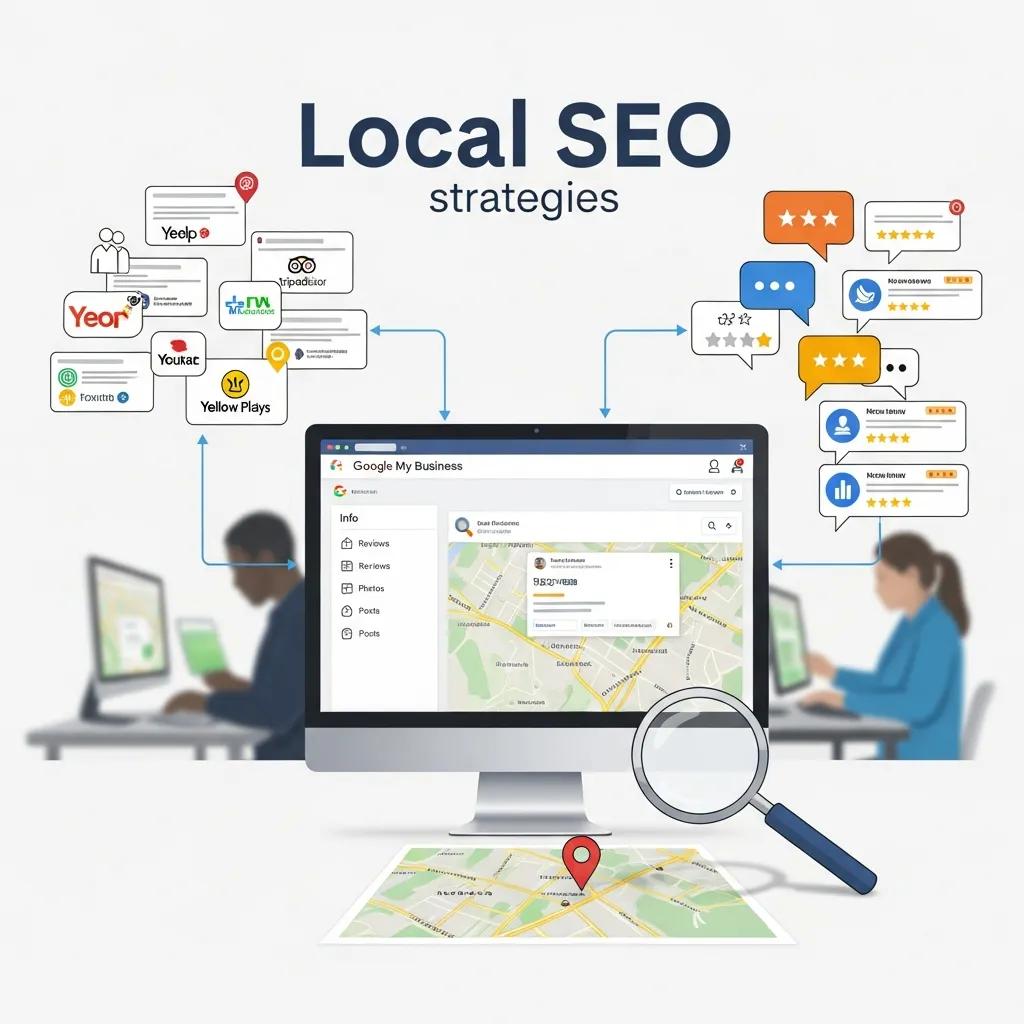
Core, repeatable tactics include:
- Google My Business Optimization: Claim and keep your listing accurate so you show in local results and Maps.
- Local Citations: Maintain consistent NAP (name, address, phone) across major directories.
- Customer Reviews: Encourage reviews, respond promptly and use feedback to improve visibility and trust.
These practical steps make it easier for local customers to find and choose your business.
For retailers, optimising profiles like Google My Business is critical to increasing organic traffic and conversions.
Local SEO Strategies for Retailers: Google My Business & Local Pack
The research confirms the importance of local optimisation for retailers to increase organic traffic. It provides practical recommendations and data examples (by the example of a Ukrainian retailer) to improve placement in the Local Pack and boost conversions.
Business optimization in the digital age: Insights and recommendations, A Natorina, 2020
How Does AI Enhance Local SEO Marketing Techniques?
AI speeds listing updates, surfaces high-value local keywords, automates review monitoring and drafts responses. Use AI to prioritise tasks and monitor reputation while ensuring local relevance and human oversight.
What Defines Traditional SEO and Its Broad Organic Search Techniques?
Traditional SEO aims for organic visibility at scale. It focuses on content, backlinks and technical improvements to increase authority and attract broader audiences across regions or countries.
Which Traditional SEO Techniques Boost National and Global Rankings?

Key methods include:
- Keyword Research: Target intent-driven, higher-volume terms aligned with audience needs.
- Link Building: Earn authoritative backlinks to boost domain and page authority.
- Content Optimization: Create valuable, structured content that satisfies search intent and earns links.
These actions expand reach beyond local markets and support scalable traffic growth.
How Do SEO Marketing Differences Affect Customer Acquisition?
Local SEO focuses on nearby intent and immediate conversions; Traditional SEO builds awareness and traffic at scale. Choose the approach that matches your customer geography and acquisition goals.
How Do Local SEO and Traditional SEO Differ in Marketing Impact and Use Cases?
Impact depends on business model: Local SEO drives store visits and local conversions, while Traditional SEO supports broader brand reach and scalable lead generation. Budget and resources should reflect that focus.
Which Businesses Benefit More from Local SEO vs Traditional SEO?
Local SEO is a priority for:
- Local Retail Stores seeking foot traffic.
- Service-Based Industries (plumbers, landscapers, home services).
- Restaurants and Cafes attracting nearby diners.
E‑commerce and national brands typically prioritise Traditional SEO for wider audiences.
What Are the Key SEO vs Local Marketing Performance Metrics?
Monitor:
- Traffic Sources: Local vs organic vs referral.
- Conversion Rates: How visits turn into leads or sales.
- Customer Engagement: Time on site, pages/session and bounce rate.
These metrics guide optimisation and budget allocation between local and traditional efforts.
How Can AI-Driven Marketing Systems Optimize Both Local and Traditional SEO?
AI automates reporting, surface tests and optimisation suggestions, and scales workflows across campaigns. It helps teams prioritize content, refine targeting and speed routine tasks while maintaining measurement discipline.
Studies show that integrating AI into SEO models improves keyword rankings, organic traffic and user engagement.
AI-Driven SEO Models for Enhanced Digital Marketing Performance
This study examines the impact of AI-driven SEO models on digital marketing performance and the need for adaptive, data-driven optimisation in an increasingly algorithmic search environment. It finds that AI improves keyword ranking stability, organic traffic, user engagement and conversion metrics, with SEO performance acting as a significant mediating factor.
AI-Driven SEO Models for Enhancing Digital Marketing Performance, 2025
What Role Does Revenue Infrastructure Play in SEO Automation?
Revenue infrastructure stitches together analytics, content and ad systems so AI can run experiments, track keywords and feed performance into decision-making—improving ROI and prioritisation.
How to Deploy AI-Powered SEO Tools for Enhanced Customer Acquisition?
To deploy AI SEO tools, follow these steps:
- Choosing the Right Tools: Select tools that fit your goals—local listing managers for multi-location businesses, content and link tools for broader SEO.
- Implementation Strategies: Roll out in phases, assign ownership and document workflows.
- Measuring Success: Define KPIs, run tests and iterate based on results.
Use AI-powered tools to strengthen your SEO strategies and make customer acquisition more efficient. To further enhance your SEO efforts, consider exploring Cinderix, a platform that helps streamline and optimise your revenue infrastructure. Cinderix provides tools and insights to improve your SEO automation and drive better results.
Frequently Asked Questions
What types of businesses benefit most from Traditional SEO?
Traditional SEO fits e‑commerce, national brands and large service providers that need to attract audiences beyond local markets through content, keywords and links.
How can businesses effectively integrate AI into their SEO strategies?
Pick tools aligned to goals, train teams, integrate into workflows and measure with KPIs. Start small, validate results, and scale successful automations.
What are the key differences in content strategy between Local and Traditional SEO?
Local content focuses on geographic relevance—local pages, events and reviews. Traditional content targets broader topics and higher-volume keywords to capture a wider audience.
How does mobile optimization impact Local SEO?
Mobile optimisation is essential for Local SEO because many local searches happen on mobile. Fast, responsive pages reduce bounce rates and improve local rankings.
What are some effective ways to manage online reviews for Local SEO?
Encourage reviews, respond constructively, monitor platforms and use feedback to improve services—this supports reputation and local visibility.
How can businesses stay updated on Local SEO trends and algorithm changes?
Follow reputable SEO blogs, attend webinars and join industry forums. Subscribe to expert newsletters and network with peers to share practical updates.
What are the main benefits of using Local SEO for small businesses?
Local SEO increases visibility for nearby searches, attracts ready-to-buy customers and strengthens engagement through reviews and an optimised business profile.
How can businesses measure the success of their Local SEO efforts?
Track local search traffic, conversions, engagement, local rankings and review volume, and review these metrics regularly to refine tactics.
Can Local SEO strategies be applied to e-commerce businesses?
Yes. E‑commerce sites with physical stores or regional focus should use local keywords, optimise listings and manage reviews to capture nearby buyers.
What role do online reviews play in Local SEO?
Reviews influence reputation and rankings—quantity, recency and quality matter. Active management improves visibility and trust.
How does Traditional SEO impact local businesses?
Traditional SEO builds broader online presence and helps local businesses reach audiences beyond their immediate area through content and link strategies.
What are some common mistakes businesses make with Local SEO?
Common errors include neglecting Google My Business, inconsistent NAP data, ignoring reviews and failing to use localised content and keywords.
How often should businesses update their Local SEO strategies?
Review Local SEO at least quarterly, and update more frequently after changes in feedback, search trends or major algorithm updates. Keep listings current.
Conclusion
Understanding the differences between Local and Traditional SEO helps you choose the right tactics for target customers. Apply focused local tactics for nearby visibility or broader optimisation for national reach, and use AI and integrated systems to scale and measure results.
Conclusion
Tailor strategies to your audience: prioritise local signals and reviews for nearby customers, or invest in content and links to grow nationally. Integrating AI and automation streamlines work and delivers measurable improvements—start refining your approach to connect with the right audience.