
Understanding SEO Pricing Models: Key Differences Between Agencies and Freelancers Explained
By Frank Wiebe, Cinderix
Clear knowledge of SEO pricing helps organisations choose the right supplier and budget effectively. This article compares agency and freelancer models, outlines common pricing frameworks, highlights cost drivers, and explains how AI-enabled pricing can improve transparency and ROI to support an informed procurement decision.
Key Takeaways
- SEO pricing models commonly used are fixed, hourly, and performance-based, each fitting different project types.
- Agencies usually charge more due to wider service scopes and overhead.
- Freelancers are often less expensive and focus on specific SEO tasks.
- Scope, contract terms, and KPIs are major determinants of price differences.
- AI-driven pricing increases transparency with real-time metrics and automated reporting.
- AI tools can improve ROI by informing keyword selection and tracking performance.
- Choice depends on project size, complexity, budget, and preferred communication.
- Negotiate with clear scopes, market knowledge, and, where suitable, performance-based terms.
What Are the Primary SEO Pricing Models Used by Agencies and Freelancers?
Providers typically adopt fixed, hourly, or performance-based pricing. Selecting the right model aligns spending with deliverables and risk tolerance.
How Do Fixed, Hourly, and Performance-Based Pricing Differ in SEO Services?
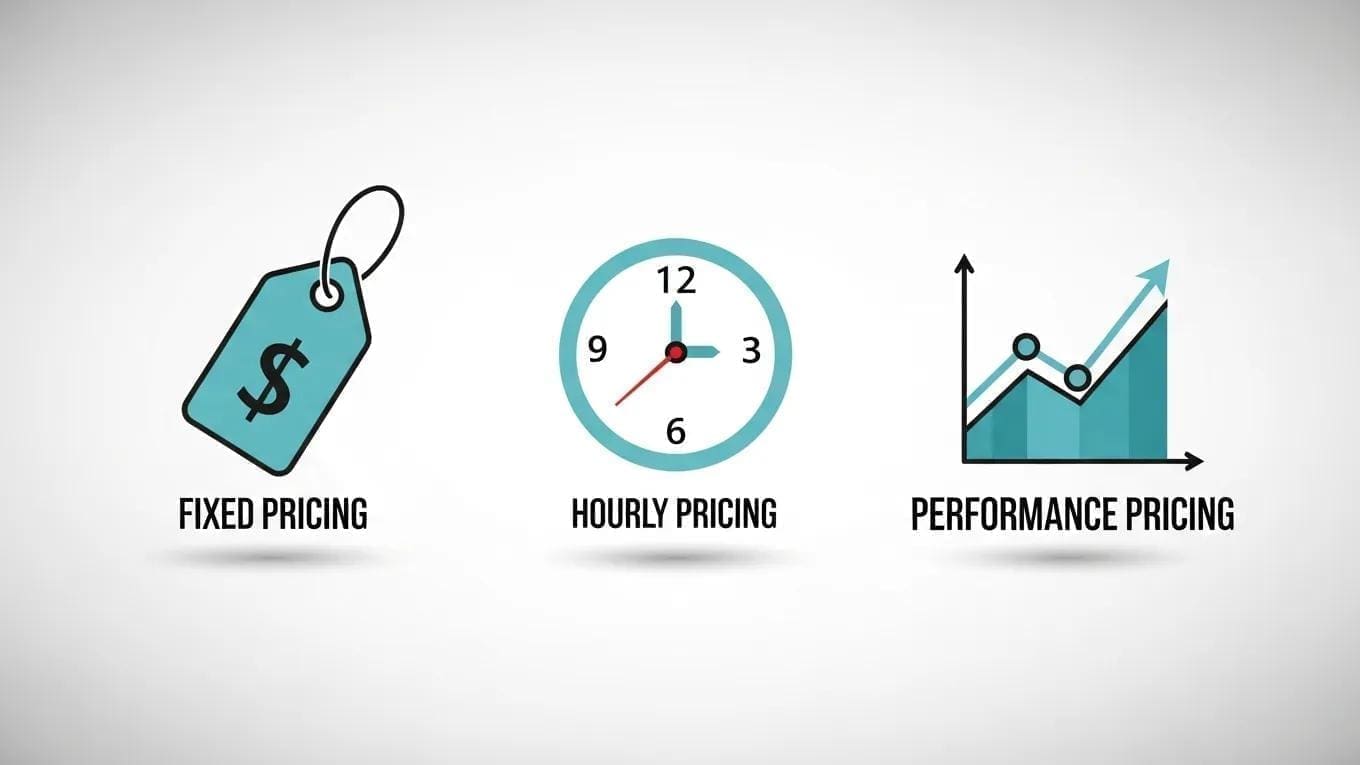
Fixed fees suit defined projects like audits. Hourly billing covers evolving work and ongoing optimisation. Performance-based fees tie payment to agreed outcomes such as traffic or ranking improvements.
What Are Typical Pricing Ranges for Agencies Versus Freelancers?
Rates vary widely: agencies typically charge higher retainers or project fees, while freelancers usually offer lower hourly or project rates reflecting smaller teams and narrower scopes.
The table summarises typical cost structures and the contrast between agency and freelancer pricing.
Which Factors Influence SEO Pricing Differences Between Agencies and Freelancers?
Several factors explain pricing variance; understanding them helps match supplier capability to project needs and estimate total cost.
How Do Service Scope and Deliverables Affect SEO Costs?
Broader, end-to-end services (strategy, content, technical SEO, cross-channel work) increase agency fees. Freelancers commonly offer focused deliverables, which can reduce cost and allow modular engagement.
What Role Do Contract Types and Performance Metrics Play in Pricing?
Contract length, KPI definitions, and risk allocation influence price. Agencies often require longer commitments with embedded KPIs; freelancers may offer shorter, more flexible terms. Clear deliverables and metrics aid accountability.
What Are the Advantages of AI-Driven SEO Pricing Compared to Traditional Models?

AI-driven pricing uses data analytics to estimate costs and likely outcomes, improving transparency and operational efficiency.
How Does AI Enhance Pricing Transparency and Efficiency in SEO Services?
AI gives near real-time campaign metrics for verification, supports evidence-based decisions, and automates reporting so providers spend more time on strategy.
What ROI Benefits Can Businesses Expect from AI-Powered SEO Pricing?
Businesses using AI-enabled pricing often see better ROI through improved analysis, more effective keyword choices, increased organic traffic, and clearer links between spend and performance.
For those seeking to leverage AI in their SEO efforts, Cinderix operates as an AI-driven marketing technology provider focused on enabling businesses to deploy Revenue Infrastructure. Their innovative solutions can help businesses optimize their SEO strategies effectively.
How Should Businesses Choose Between SEO Agencies and Freelancers Based on Pricing and Needs?
Choose by assessing project scale, technical requirements, timeline, and internal capacity. This structured approach reduces procurement risk and aligns provider selection with strategy.
What Key Decision Factors Should Influence the Choice of SEO Provider?
Consider project size, complexity, long-term goals, and desired level of vendor involvement. Agencies fit large integrated programs; freelancers suit targeted, smaller tasks with lighter coordination needs.
How Can Businesses Negotiate SEO Pricing for Optimal Value?
Negotiate using market benchmarks, a clear scope, and measurable KPIs. Performance-based elements can align incentives where appropriate.
Frequently Asked Questions
What should I consider when evaluating the experience of an SEO provider?
Review case studies and testimonials, prioritise experience in your industry and comparable scale, and check for measurable results.
How can I measure the effectiveness of my SEO investment?
Track KPIs such as organic traffic, keyword rankings, conversions, and ROI using analytics and SEO platforms; review regularly against targets.
Are there any hidden costs associated with hiring an SEO agency or freelancer?
Hidden costs can include content production, technical audits, or ongoing maintenance; clarify scope and potential extras upfront and account for internal coordination time.
What is the typical duration for seeing results from SEO efforts?
Initial improvements often appear in three to six months, but sustained gains require consistent work and depend on competitiveness and site condition.
How can I ensure effective communication with my SEO provider?
Set expectations and reporting cadence at contract start, hold regular status meetings, and use project tools to centralise tasks and feedback.
What are the risks of choosing the lowest-priced SEO option?
Very low-cost providers may sacrifice quality, transparency, or use ineffective tactics; balance price with demonstrated expertise and best practices.
Conclusion
Understanding pricing models, cost drivers, and the role of AI helps organisations choose the provider and contract structure that best fits their objectives and budget.